
Sports acupuncture brings together traditional Chinese medicine approaches and targeted muscle needling, with treatment guided by your symptoms and an individual assessment.
A sports acupuncture appointment begins with a discussion about your training, previous injuries and any movements that cause discomfort.
Depending on your assessment, sports acupuncture may involve points along the relevant meridians, local muscle trigger points, or a combination of both.
You don’t need to be a competitive athlete to discuss sports acupuncture with us. We also see people who exercise recreationally, attend the gym or play community sport.
Before starting sports acupuncture, we discuss whether it is appropriate for you, what treatment involves and its potential benefits, risks and limitations.
At Altona Acupuncture, we combine traditional acupuncture with targeted muscle needling and, where appropriate, cupping, gua sha and moxa. The approach depends on where you’re sore, how you move and what your training involves.
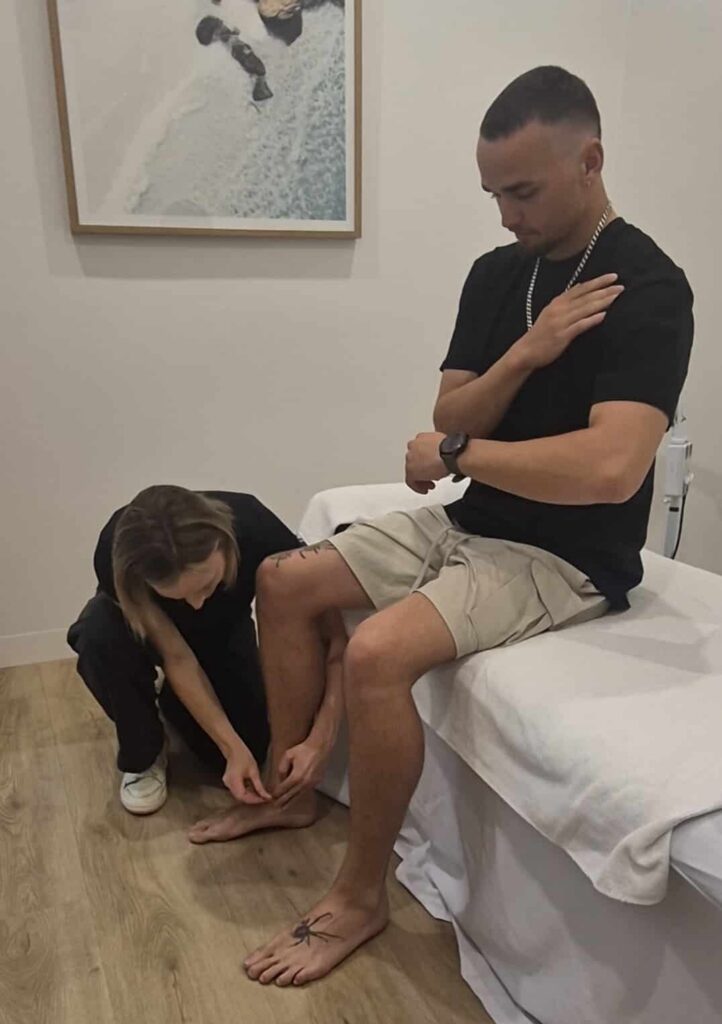
1. Treating pain through acupuncture meridians
In Chinese medicine, meridians are traditionally understood as pathways through which Qi and Blood flow. When this flow is disrupted, pain, stiffness and soreness may develop. Treatment aims to restore movement through the affected channels and ease discomfort.
We select acupuncture points along the meridians associated with the painful area. These may include points close to the discomfort and others further away, such as on the hands, arms or legs. This is why treatment for shoulder pain might involve more than needling the shoulder itself.
Modern research suggests acupuncture may help with several pain conditions, including back and neck pain. Its effects are thought to involve the nervous system and the way the body processes pain.
2. Needling trigger points to ease tight muscles
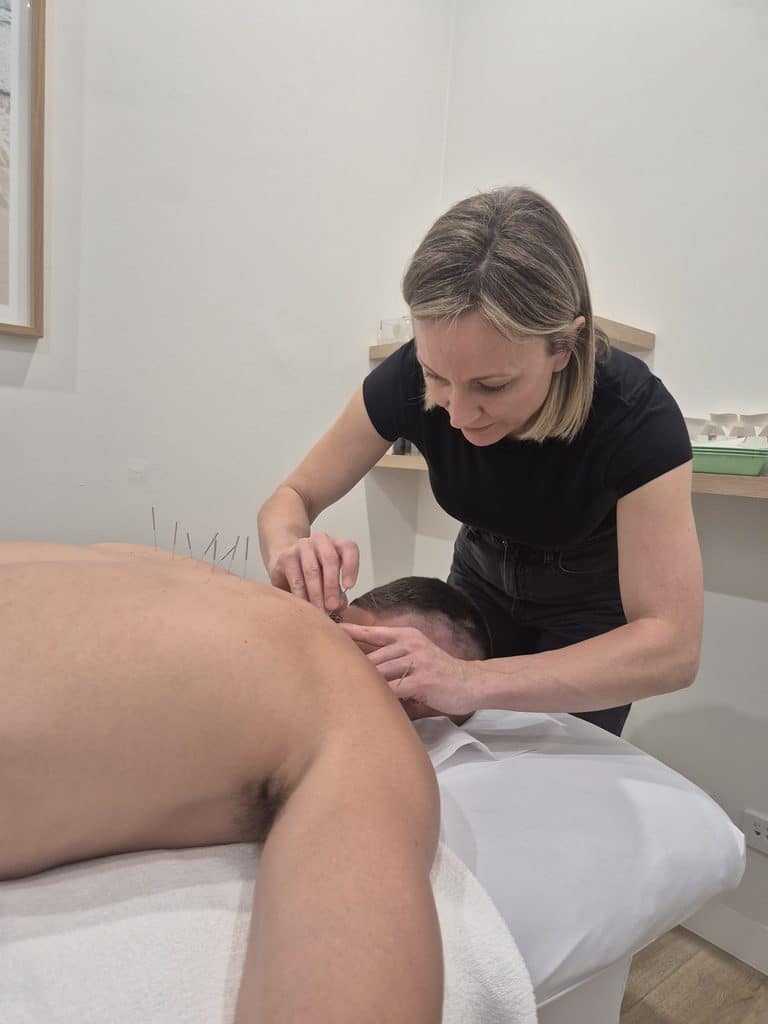
Alongside meridian-based acupuncture, we can work directly with sensitive areas within tight bands of muscle, known as trigger points. These can be tender when pressed and may refer pain to another area.
Trigger point needling uses fine needles to target these areas, with the aim of easing muscle tension and discomfort. This technique is also used in dry needling.
The photos accompanying this post show treatment for a patient who trains as a boxer. Throwing punches, rotating through the torso and holding a guard repeatedly load the shoulders and upper back. His treatment included work around the rhomboids and trapezius, as well as his calves to address tightness associated with training and footwork.
Dr Aleisha Matthews can help you with trigger point therapy, check out her bio here
3. Cupping for sore, tight areas
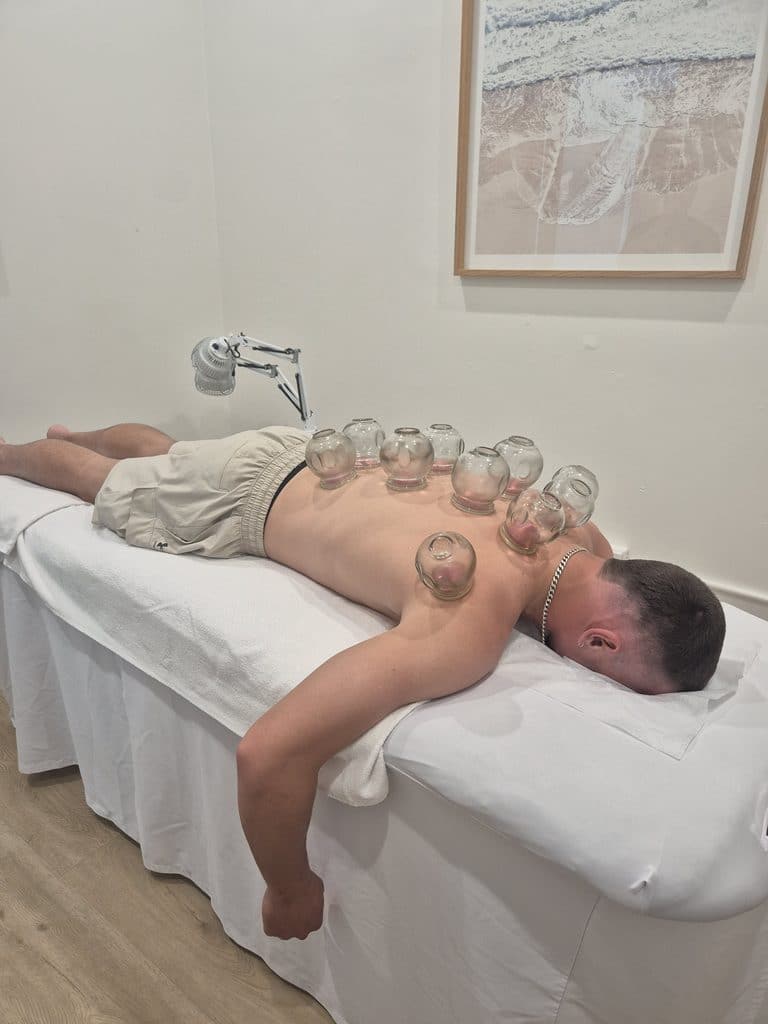
Cupping uses suction to gently lift the skin and underlying superficial tissues. Cups can remain in one position or be moved across an oiled area, depending on the treatment.
We may include cupping over the back or other muscular areas as part of treatment for soreness and tightness. In Chinese medicine, it is traditionally used to encourage the movement of Qi and Blood where there is stagnation.
4. Moxa to bring warmth
Moxa, or moxibustion, uses the warmth of burning dried mugwort near selected acupuncture points or areas of the body.
In Chinese medicine, moxa is traditionally used to warm the channels and move Cold, particularly when aching or stiffness feels better with warmth. We choose it according to your presentation, rather than including it in every sports treatment.
Gua sha for areas of tension
Gua sha involves repeated strokes over tight muscles using a smooth-edged tool. Pressure is adjusted to suit the area being treated and your comfort.
Gua sha is one of the techniques we may include in a sports acupuncture appointment, depending on your assessment.
In Chinese medicine, its traditional use is described in terms of moving stagnation and encouraging the flow of Qi and Blood. It can cause temporary redness or small red-purple marks, so we explain what to expect beforehand.
A treatment plan that fits your training
ports acupuncture may include needling specific muscle trigger points, alongside points selected according to traditional Chinese medicine principles.
The choice of techniques used in sports acupuncture depends on your symptoms, health history and the findings of your assessment.
Your appointment includes a discussion of your training routine and any movements that aggravate the problem. We then choose the techniques that suit you, reviewing your response as treatment progresses.
Sports acupuncture can be considered within a broader management plan that includes appropriate rehabilitation, recovery time and adjustments to training.
If you’re considering sports acupuncture for soreness after training, we’ll first assess your symptoms and discuss whether treatment or referral is appropriate.
The timing and frequency of sports acupuncture appointments are discussed individually, taking into account your needs and response to treatment.
Before proceeding with sports acupuncture, you’ll have the opportunity to ask questions about the proposed techniques, potential benefits, risks and limitations.